Most virtual IOP schedules run several half-day blocks each week, not a full residential day, so you keep living at home while you get structured treatment. At Texas Mental Health Services, what to expect virtual IOP starts with orientation, live group therapy, individual check-ins, and psychiatry when indicated. This guide walks through day one, privacy, crises, insurance plans, and how this level of care compares with weekly therapy and higher options.
What Is Virtual IOP?
Virtual IOP is intensive outpatient care delivered through live video on a secure telehealth platform. A virtual intensive outpatient program keeps the same clinical building blocks as in-person IOP: multi-hour group sessions, individual therapy sessions, skills practice, and a written treatment plan. You participate in virtual meetings from a private space at home while maintaining work, school, or caregiving when your clinician agrees that is safe.
What is virtual care at this intensity? It is outpatient treatment with more contact than traditional outpatient therapy, and less immersion than inpatient treatment or residential care. SAMHSA’s guidance on telehealth describes how remote behavioral health can extend access when privacy and clinical standards are met. Research summarized by the American Psychiatric Association also notes that many telehealth formats can be effective as in-person care for appropriate clients when sessions are live and clinician-led.
What to Expect Virtual IOP in Your First Week
Here is what to expect virtual IOP looks like before and during week one at Texas Mental Health Services. You complete intake paperwork, tech checks, and insurance verification so your first login is clinical time, not troubleshooting. Staff confirm you can join the telehealth platform on a laptop or tablet with a camera, headphones, and a backup phone hotspot if Wi-Fi drops.
Pre-day-one checklist
Set up a door you can close, a simple background, and a charging cable within reach. Tell household members your morning afternoon block so interruptions stay rare. Download any required app early, test video conferencing audio, and keep water and a notebook nearby. If you take prescribed medication, have the current list ready for medication management review.
Orientation and your first groups
Orientation covers confidentiality, attendance, crisis contacts, and how group therapy works online. You’ll also meet facilitators and learn mute, chat, and breakout norms. Core programming is live interactive group therapy focused on coping skills, emotional regulation, relapse prevention, and peer support—not pre-recorded modules. Expect psychoeducation on mental health symptoms, recovery habits, and self-care you can try the same evening in daily life.
Individual counseling usually starts early so a licensed clinician can refine goals, safety planning, and how symptoms interfere with daily routines. Your multidisciplinary team—therapists, group leads, and psychiatric providers when needed—adjusts the personalized treatment plan as clinical progress shows up in mood, sleep, substance use, or relationships.
How Virtual IOP Fits the Care Continuum
An IOP program sits between standard weekly therapy and partial hospitalization, inpatient hospitalization, or residential care. IOP is designed for people who need structured days of therapeutic support without overnight stays. Individuals who are stepping down from inpatient treatment or in-person programs often use virtual IOP to keep momentum. Others step up from traditional outpatient therapy when anxiety depression, depression anxiety patterns, trauma, or substance abuse start to interfere with daily functioning but do not require inpatient supervision.
Virtual PHP and IOP differ mainly in hours and monitoring. Partial hospitalization is a higher outpatient intensity with longer clinical days. Virtual IOP still offers more support than weekly appointments while leaving evenings free for home life. Do you need virtual PHP or IOP? Clinicians look at safety, symptom severity, support at home, and whether you can engage several days a week. People who need structured contact after a crisis, or who cannot yet stabilize on weekly therapy alone, often fit IOP. Those with acute risk may still need in-person care or a higher level first.
Who Can Benefit From Virtual Intensive Outpatient
Who can benefit most are adults with a reasonably stable place to log in who face barriers to clinics—distance, transportation, work shifts, school, caregiving, or health challenges that make commuting hard. Virtual treatment is designed for individuals managing mental health conditions such as anxiety depression, bipolar disorder, post-traumatic stress, OCD-related patterns, and co-occurring substance use disorders when home is safe enough for outpatient work.
Addiction treatment tracks inside virtual IOP still emphasize accountability, triggers, and peer support. Family members may join selected family therapy sessions so home dynamics support change rather than undermine it. Whether you’re balancing a job or parenting, care that fits real schedules matters; many programs offer morning afternoon options so treatment does not erase the rest of your week.
Evidence-Based Treatment You Will Practice Online
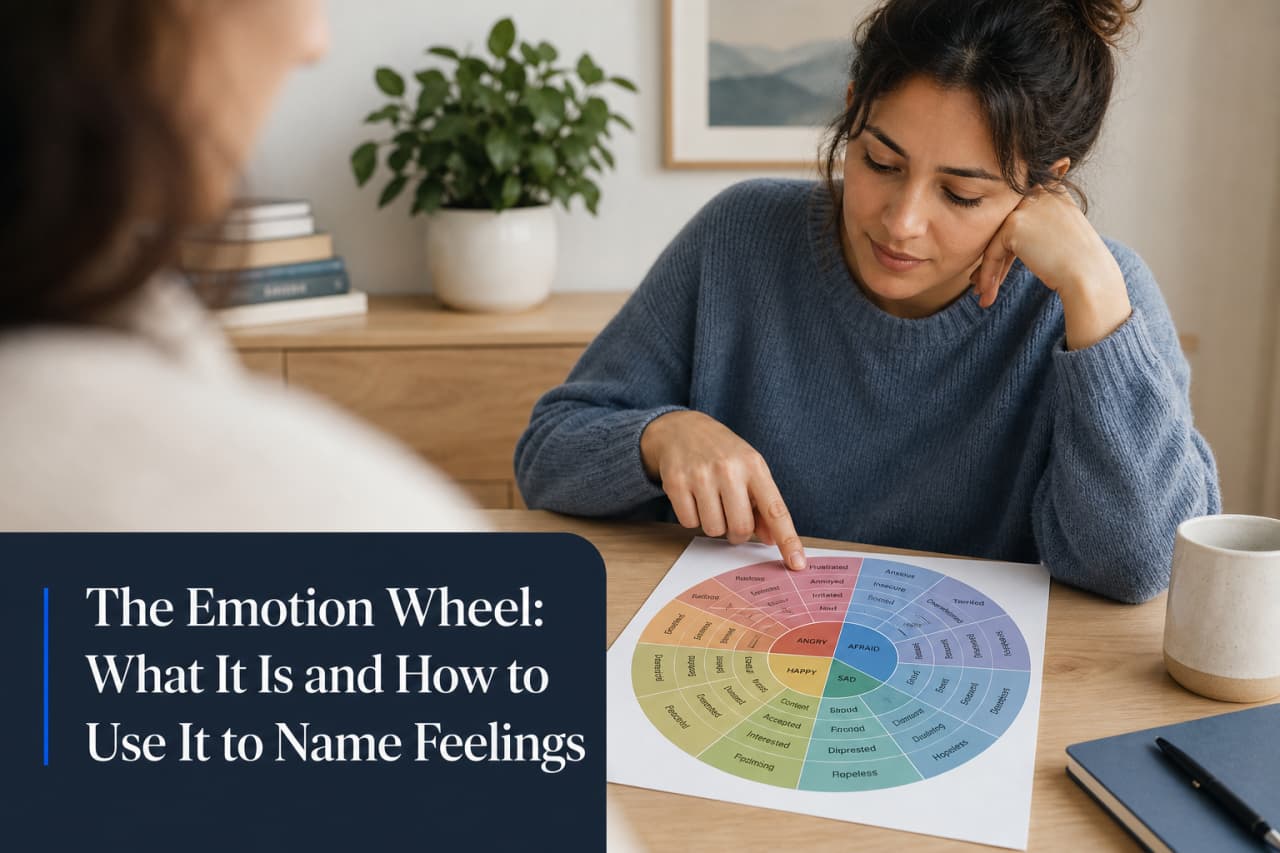
Expect evidence-based treatment modalities, not generic chat. Cognitive behavioral therapy targets unhelpful thought—behavior loops. Dialectical behavior therapy DBT skills build distress tolerance and emotional regulation. Trauma-informed work paces exposure to hard material. Group sessions and one-to-one time both teach coping skills you rehearse between meetings, which is a unique strength of staying home: you practice in the same kitchen, commute, or relationship where symptoms show up.
High-quality care online still means licensed clinicians, clear goals, and measurement of daily functioning. Evidence-based care aims at short-term stabilization so you can return to less intensive outpatient treatment with tools that hold. Therapy typically blends skills groups, process groups, and individual goals rather than open-ended talk alone.
Is Virtual IOP Effective as In-Person Care?
For many non-crisis presentations, live telehealth IOP can be effective as in-person formats when engagement is strong and the home setting is private. In-person IOP and in-person treatment remain better when someone needs hands-on monitoring, lacks a private space, or faces safety issues that virtual channels cannot manage. Texas Mental Health Services helps you compare treatment options honestly so you are not pushed into a screen if a higher level of care fits better.
Remaining home while you participate in group work lets you test skills the same day. That real-world loop can reinforce habits faster than waiting until discharge from a facility. Still, virtual is not a looser version of care. Attendance, participation, and homework expectations match structured treatment standards used in clinics.
Therapy Sessions, Psychiatry, and Your Treatment Plan
Beyond groups, therapy sessions one-on-one track personal goals, setbacks, and relationships. Medication management is available or coordinated when symptoms of depression anxiety, bipolar disorder, or other health symptoms warrant evaluation. Psychiatric support does not replace therapy; it sits beside it inside a multidisciplinary model.
How are plans personalized? Your team uses intake history, symptom scales, substance use patterns, and your own priorities to shape a living treatment plan. Frequency can taper as clinical progress holds—sometimes stepping down to fewer virtual days, then to a virtual outpatient program or community weekly therapy. Therapy family sessions, when clinically useful, bring family members into communication skills without turning every hour into couples work.
Schedule, Duration, and Time Commitment
Plan on multiple days each week in multi-hour blocks—commonly half-day rather than full residential immersion. Duration is individualized across several weeks to a few months. As symptoms ease, some people reduce days before discharge. Daytime and evening tracks help you protect employment or classes while you still receive more support than weekly therapy alone.
That time commitment is intentional. Intensive outpatient structure creates enough repetition for skills to stick, then releases you back into daily life to test them. If work conflicts spike, tell your clinician early so the schedule or level of care can adjust rather than silent no-shows.
Privacy, Safety, and Tech Reality in Virtual IOP
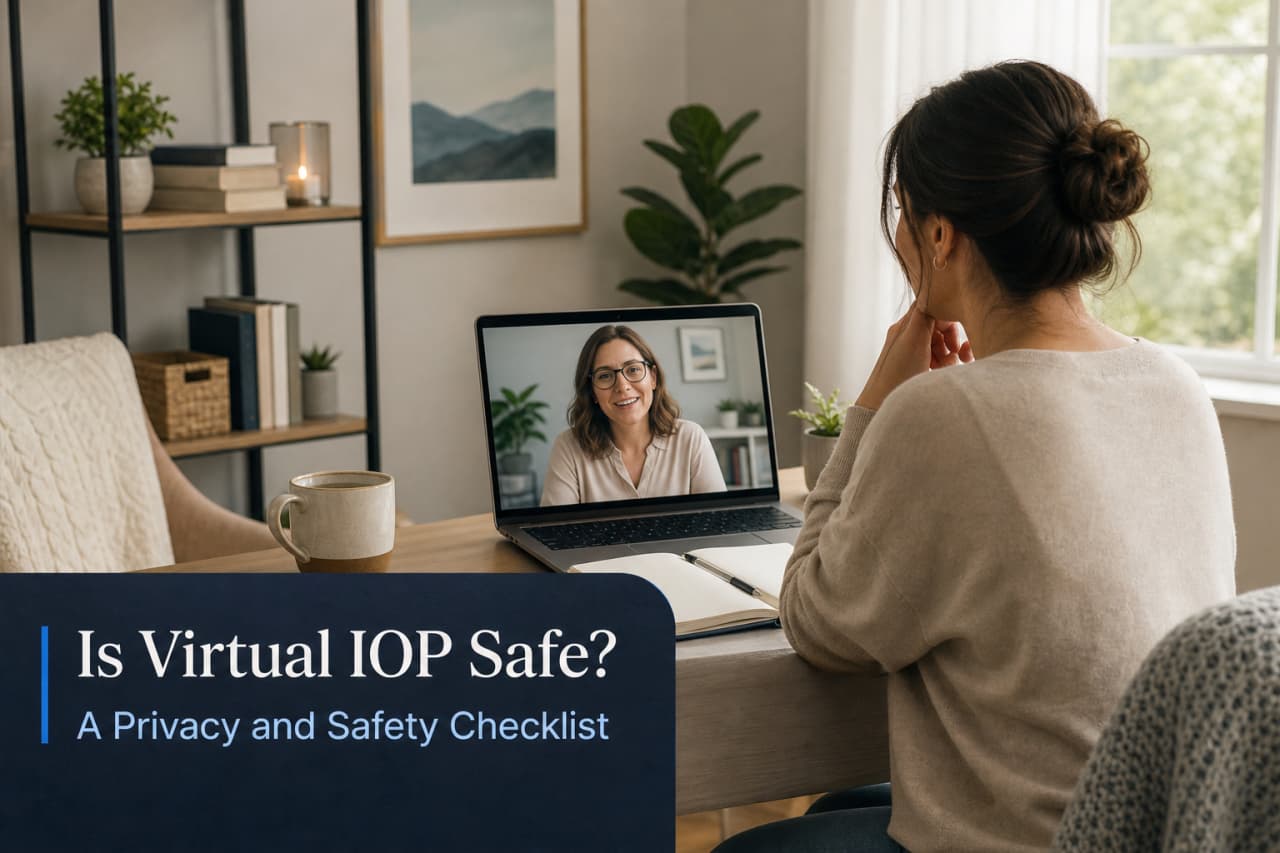
Privacy in group sessions relies on a secure telehealth platform, unique links, and rules against recording or having uninvited people in the room. Use headphones, blur or simplify your background, and join from a closed space. Clinicians can remove someone who breaks confidentiality norms. HIPAA-aligned processes govern how health care information is stored and shared with insurance providers when you authorize it.
If internet fails mid-session, reconnect immediately on phone data, then rejoin the meeting link. If you cannot get back online, call the program number on your welcome sheet so staff know you did not walk out of care. Keep a simple crisis card nearby: local emergency services for imminent danger, and the 988 Suicide & Crisis Lifeline for urgent mental health support between sessions.
Therapists handle crises in virtual IOP by assessing risk on camera, using safety plans, involving emergency services when needed, and escalating level of care if home is no longer safe. Virtual channels do not replace 911 when someone is in immediate danger. Drug testing policies vary by track and clinical need; substance-focused programming may require testing as part of accountability, while pure mental health tracks may not—your consent forms state the rule before you start.
Virtual IOP at Texas Mental Health Services
Texas Mental Health Services is a private virtual provider focused on accessible behavioral health, not a state HHSC clinic. Our virtual IOP path emphasizes orientation clarity, live groups, individual work, and psychiatry when indicated. We help you verify insurance with major insurance networks when possible, explain benefits in plain language, and map step-up or step-down moves without shame if needs change.
You can move between virtual and clinic-based paths when clinically appropriate and logistically allowed. Switching from in-person IOP to virtual mid-program depends on stability, state licensure rules, and team agreement, not preference alone. Licensure also limits crossing state lines: you generally must physically be in a state where the treating clinicians are authorized to practice. If you plan to travel, ask admissions before you book flights.
Aftercare after completion often includes step-down virtual outpatient days, referrals to traditional outpatient therapy, medication follow-up, and relapse-prevention planning. If you relapse during virtual IOP, tell your clinician the same day. The response is clinical, safety check, plan update, possible more support or a higher level, not automatic discharge for honesty. Healing journey language can sound soft; in practice it means concrete next appointments and skills you can name under stress.
Insurance Plans and Getting Started
Coverage for intensive outpatient mental health and substance use disorders differs by plan. Our team can help verify insurance before day one so you understand authorizations, copays, and what outpatient program benefits apply. Bring card images and any primary-care referral your insurer requires. Self-pay details are reviewed case by case; we do not publish dollar figures here because benefits change.
Ready to get started? Contact our team today to learn more about virtual IOP, admissions steps, and whether this level of care matches your symptoms and home setup. Bring questions about schedule, family therapy, and medication management to that first call.
FAQ: What to Expect From Virtual IOP
How do therapists handle crises during virtual IOP sessions?
They assess risk live on video, use your safety plan, stay with you when possible, and contact emergency services if danger is imminent. Between sessions you use 988 or local emergency numbers. Ongoing high risk can trigger a move to in-person care or inpatient hospitalization.
How is privacy protected in virtual IOP group sessions?
Sessions run on a privacy-compliant telehealth platform with access controls. Participants agree not to record, and everyone joins from a private space. Breaches can lead to removal from group. Clinical notes follow standard health care confidentiality rules.
Can I attend virtual IOP while living in another state?
Only if you are physically located where the clinicians are licensed to treat you. Crossing state lines without clearance can pause care. Tell admissions your address and any travel plans before enrollment.
What aftercare support follows completion of virtual IOP?
Most people step to fewer days, then standard outpatient treatment, with continued medication management when needed. You leave with a written plan, crisis contacts, and referrals. Family members may stay involved in limited follow-up sessions when helpful.
What if my internet fails during a virtual IOP session?
Switch to mobile data, rejoin the link, and call the program line if you stay offline. Documented tech issues are treated as attendance problems to solve, not automatic no-shows, when you communicate quickly.
Is drug testing required during a virtual IOP program?
It depends on your track and clinical indications. Substance use disorders programming often includes testing; other mental health tracks may not. Requirements appear in consent forms before you start so expectations are clear.
How are treatment plans personalized in virtual IOP?
Intake data, your goals, diagnosis mix, and weekly feedback shape the plan. The team updates interventions when anxiety, mood, or substance patterns change. You should always know the next skill focus and session targets.
Can I switch from in-person IOP to virtual mid-program?
Sometimes, if clinically appropriate, technology-ready, and allowed by licensure and payer rules. The reverse is also true when virtual no longer meets safety needs. Decisions rest with the treatment team, not convenience alone.
Does virtual IOP include medication management support?
Yes when indicated. Psychiatric evaluation and ongoing medication management can be part of the model or closely coordinated. Bring an accurate med list and pharmacy details to the first psychiatry visit.
What should I do if I relapse during virtual IOP?
Contact your clinician or on-call process the same day. Expect a safety review, plan changes, and possibly more structure or a higher level of care. Honest reporting protects your treatment program more than silence does.
Your Next Step With Texas Mental Health Services
What to expect virtual IOP, in short: live structured days, skills you practice at home, individual and group work, and a clear path up or down the continuum when life changes. If symptoms such as anxiety, depression, trauma load, or substance use are outpacing weekly therapy, virtual intensive care may fit while you keep sleeping in your own bed. Contact Texas Mental Health Services to review fit, insurance verification, and start dates, and walk into day one already knowing the room, the rules, and the work ahead.