Twenty skills make up standard DBT skill training. Most programs group them as mindfulness, distress tolerance, emotion regulation, and interpersonal effectiveness before any session starts. Adults comparing DBT therapy online in Texas should confirm live teaching, assigned practice between sessions, clinician feedback, and a clear fit with Virtual IOP or outpatient care.
Press for the exact skills you will rehearse and how staff review your use of them. Texas Mental Health Services is a private virtual provider, separate from the Texas HHSC and DSHS state system. This article is educational. A clinical assessment is required before any treatment or level-of-care recommendation.
Core pieces of DBT therapy online in Texas
Expect four skill categories, live instruction, practice between sessions, and direct feedback. A DBT-informed program may use selected DBT methods without delivering every piece of full-model DBT. Ask the provider to put its model in writing.
Texas Mental Health Services offers virtual levels of care for adults in Texas, including Virtual Intensive Outpatient Program and Virtual Outpatient options. Clinical need drives the right level, not the DBT label alone. The National Institute of Mental Health overview of psychotherapy notes that treatment plans depend on a person's needs and may combine different approaches.
| Skill category | Main purpose | Virtual practice example | Possible level-of-care use |
|---|
| Mindfulness | Notice the present moment and choose where to place attention | Guided exercise followed by a brief review | Foundation work in Virtual IOP or outpatient care |
| Distress tolerance | Get through a short-term emotional spike without adding harm | Rehearse a written coping sequence before it is needed | Repeated practice in IOP or focused review in outpatient care |
| Emotion regulation | Name emotions, examine facts, and choose a response | Complete a worksheet and discuss the result | Broader teaching in IOP or targeted work in outpatient care |
| Interpersonal effectiveness | Make requests, set limits, and protect relationships | Role-play a real conversation by video | Group rehearsal or individual coaching when offered |
Demand specifics. A program name alone will not tell you how often skills are taught, practiced, or reviewed.
Mindfulness skills you can practice virtually
Mindfulness is one of four DBT skill categories and often opens Virtual IOP or outpatient skill work at Texas Mental Health Services. Begin by noticing thoughts, emotions, physical sensations, and surroundings without reacting at once. Mindfulness creates the pause the other three DBT categories rely on.
Observe means catching what is happening inside and around you before you choose a response. Describe means using factual words for an emotion, thought, urge, or event instead of treating an assumption as fact. Participate means giving attention to the task or conversation in front of you. Act one-mindfully by doing one task at a time when split attention is raising stress. A nonjudgmental and effective stance replaces labels with observable facts, then picks the action that fits your goal.
A virtual group can run a short guided exercise and then discuss it. An individual session can tie that exercise to a recurring situation, such as shutting down during conflict or reacting too fast to a message. Adults reviewing Texas Mental Health Services should ask how group and individual formats are used in the program under consideration.
Keep practice concrete. Write down what you noticed, what you did next, and what followed.
Distress tolerance skills that fit virtual care
Distress tolerance is the second of four DBT skill categories taught across the 20-skill set. It gives you a short-term plan for intense moments when immediate problem-solving is not possible. These tools buy time. The source of the distress still needs attention once the intensity drops.
STOP means stop, step back, observe what is happening, and proceed with awareness rather than acting on the first urge. Grounding through the senses directs attention to specific sights, sounds, textures, or other details in your current setting. Paced breathing follows clinician guidance on a pattern you can use without becoming lightheaded or uncomfortable. Sensory self-soothing relies on simple, nonharmful cues prepared ahead of time so you can stay present during distress. Comparing short-term and long-term consequences means writing the likely results of acting on an urge next to the likely results of using a coping skill.
Some DBT distress-tolerance exercises use temperature changes or intense movement. Those methods may not suit people with certain medical needs. A clinician should help you pick physical exercises that match your health status.
Virtual IOP can give repeated chances to rehearse a coping sequence and review how it worked. Virtual Outpatient care may focus on one recent event and a smaller set of tools. Texas Mental Health Services can explain which activities sit in each program.
Emotion regulation skills you can learn online
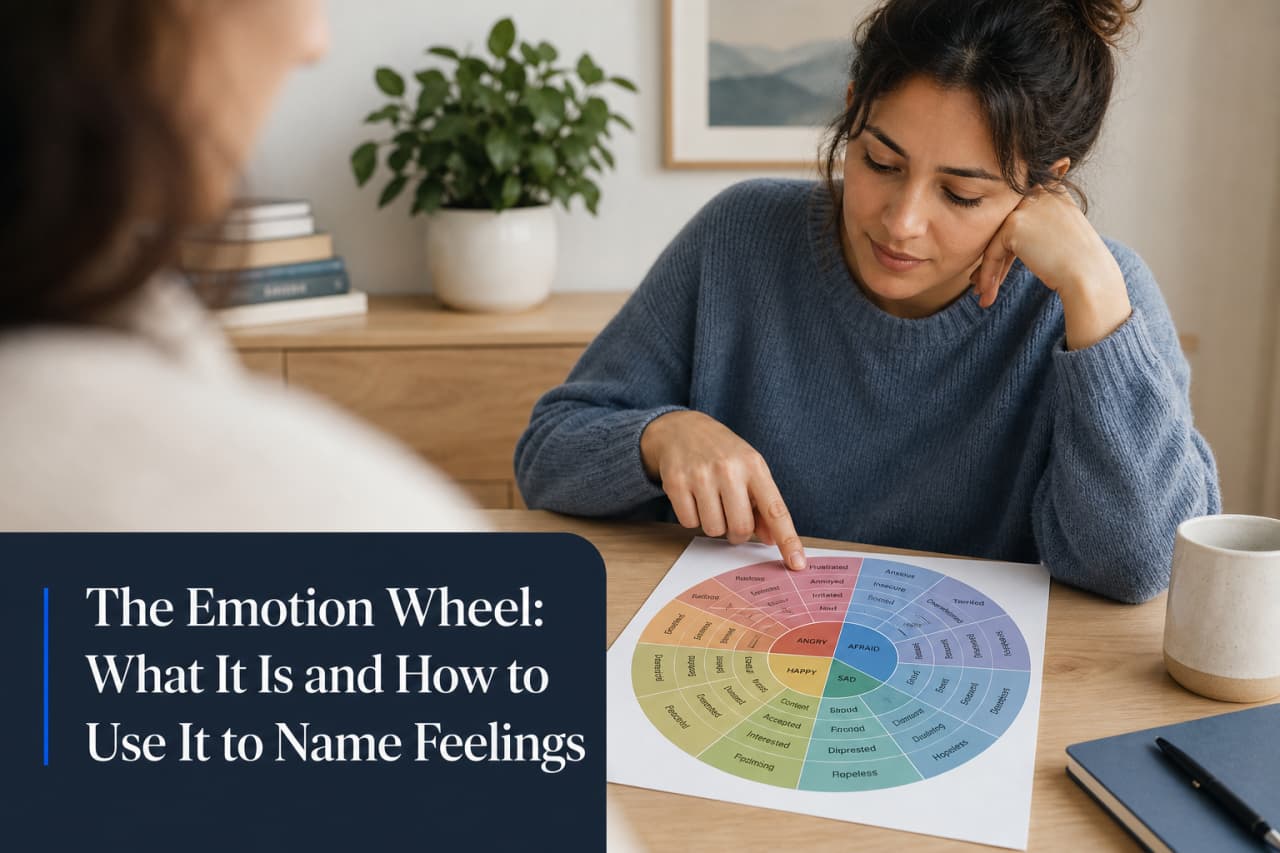
Emotion regulation is the third of four DBT skill categories used in virtual care for adults in Texas. It starts with naming the emotion, its trigger, and the urge that follows. The aim is a deliberate response based on facts and safety.
Name the emotion with a specific label and rate its intensity the same way each time. Identify the prompting event by separating what happened from the meaning you assigned to it. Check the facts for evidence that supports or challenges your interpretation. Use opposite action when the emotion or its intensity does not fit the facts, choosing a move that runs against an unhelpful urge. Use problem-solving when the facts show a changeable problem. Define the problem, pick a practical action, and review the result.
A shared worksheet can make each step visible during a virtual session. Your clinician can point out where an assumption entered the sequence or where another response was available. That review turns a general idea into a skill you can repeat.
In Virtual Outpatient care, you may work on one recurring emotional pattern at a time. Virtual IOP may allow broader instruction and more rehearsal because it provides more scheduled treatment contact. Confirm exact schedules at Texas Mental Health Services during intake.
Track the result. A skill log should record use, context, and what followed, not a simple success or failure label.
Interpersonal effectiveness skills that work by video
Interpersonal effectiveness is the fourth of four DBT skill categories in the 20-skill set. It turns a hard conversation into steps you can rehearse. Video sessions at Texas Mental Health Services support role-play because the clinician or group can hear your wording, watch your delivery, and give feedback right away.
Describe the facts. State what happened without accusations, guesses, or broad claims about the other person. Express your position by naming your feelings or needs directly instead of expecting the other person to infer them. Assert a request or limit with clear language for what you are asking, accepting, or declining. Reinforce and negotiate by explaining the practical benefit of cooperation and naming another acceptable option when needed. Protect the relationship and your self-respect. DBT tools such as GIVE and FAST organize validation, fairness, honesty, and respect for your values.
A group may practice the same request several ways. An individual session can prepare you for a private conversation with a family member, partner, friend, or workplace contact. Ask Texas Mental Health Services which formats are included at the level of care you are considering.
Rehearse before the hard conversation. Clear wording is easier to recall once you have already said it aloud.
How DBT skills map to Virtual IOP and outpatient care
Clinical need and the amount of structure required should drive the choice between the two levels. Texas Mental Health Services lists Virtual IOP and Virtual Outpatient as distinct options. Exact schedules and admission criteria still need confirmation during intake.
Program labels do not define the full schedule. Ask for the current mix of group sessions, individual contact, skills practice, and between-session work before you decide.
| Decision point | Virtual IOP | Virtual Outpatient |
|---|
| Program structure | More scheduled treatment contact than standard outpatient care | Lower-intensity schedule with more independent practice |
| Skills teaching | May cover several categories with repeated rehearsal | May target the skills tied to a current treatment goal |
| Group practice | Can support lessons, discussion, and role-play when included | Availability depends on the program design |
| Individual work | Connects skills to recurring behaviors and treatment goals | Reviews a narrower set of patterns or recent situations |
| Fit to discuss | Need for more structure, monitoring, or repetition | Ability to practice with less program contact |
Before enrolling, ask whether the service is full-model DBT or DBT-informed. Request the exact group and individual components, who gives feedback, how skill use is reviewed, and what happens if technology fails. The provider should also explain its plan for urgent concerns outside scheduled sessions.
Telehealth requires clear privacy and emergency procedures. The American Psychological Association telepsychology guidelines address confidentiality, technology, informed consent, and the locations of the clinician and client. The SAMHSA telehealth guide covers program planning for virtual mental health and substance use disorder care.
Insurance coverage is a separate decision. Texas Mental Health Services has an insurance verification process that can check benefit details. Network status, authorization rules, deductibles, and other plan terms may affect what your insurer pays.
Choose Virtual IOP when an assessment supports more structure and repetition. Choose Virtual Outpatient care when a lower-intensity schedule fits your current needs. No level of care can promise a specific outcome.
What People Want to Know
Texas Mental Health Services can answer program-specific questions during intake and insurance verification. These general answers can help you prepare.
Is virtual DBT the same as full-model DBT?
No. Virtual describes how care is delivered. Full-model DBT and DBT-informed care may use different service structures. Ask for a written description of the program components rather than relying on the DBT name.
Can I learn DBT skills in group and individual sessions?
Yes, if the program offers both formats. Group care can support instruction and role-play. Individual care can apply the skill to your goals, patterns, and current concerns.
How do I know if I need Virtual IOP or outpatient care?
A clinical assessment should determine the level of care. The decision may weigh current symptoms, safety concerns, daily functioning, outside support, and your ability to practice between sessions. Texas Mental Health Services can explain its admission process.
Can DBT skills replace emergency support?
No. DBT skills are coping methods, and a scheduled virtual program is not an emergency response service. If there is immediate danger, call emergency services. In the United States, you can call or text the 988 Suicide & Crisis Lifeline.
Does insurance cover virtual DBT care?
Coverage depends on your plan and the specific service. Insurance verification can review network status, authorization requirements, and your share of covered costs. Verification is not a guarantee that an insurer will pay a claim.
What technology do I need for virtual sessions?
Requirements vary by program. Ask about the approved device, internet connection, video platform, backup plan, and need for a private location. Complete any technology check before your first scheduled session.
Talk with Texas Mental Health Services
Contact our team to ask about Virtual IOP, outpatient care, and DBT skill work.